
Flow-Pack or Twist Wrap for Confectionery Packaging?
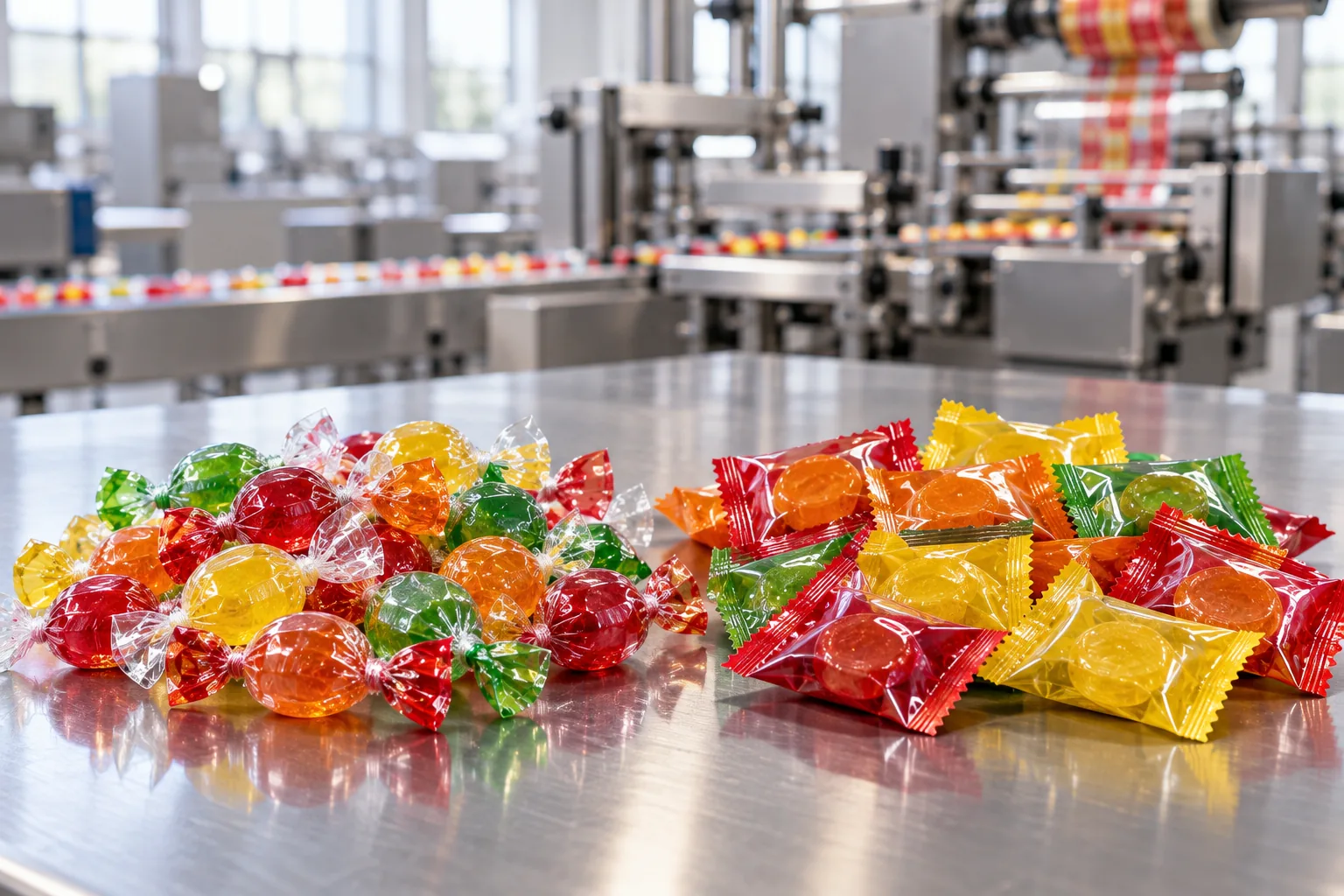
There are two common wrapping styles for hard candies and lollipops: twist wrap, where the ends are twisted, and flow-pack, where the edges are heat-sealed. The choice depends on the product's shelf life, appearance and line speed expectations.
Packaging is the first face of the product that people notice, but it also provides a moisture barrier, hygiene and shelf life. We compare the two most common individual wrapping methods in the confectionery industry.
| Criterion | Twist wrap | Flow-pack |
|---|---|---|
| Appearance | Classic, nostalgic candy look | Modern, flat pillow pack |
| Closure | Ends are twisted, no sealing | Three sides are heat-sealed |
| Moisture barrier | Limited | Better |
| Film | Requires a special twistable film | Requires a heat-sealable film |
| Suitable products | Round and oval hard candies, lollipops | Products in various shapes, multipacks |
Twist Wrap
The film wrapped around the product is closed by twisting both ends. Because there is no seal, the pack is not completely airtight; for highly moisture-sensitive products, ambient conditions and residual moisture therefore become even more important. On the consumer side, it is loved as a traditional, easy-to-open pack.
Flow-Pack
The film is formed into a tube around the product and heat-sealed lengthwise and at both ends. It provides better moisture protection and a consistent pack appearance. Individually wrapped products are also easy to collect into a secondary pack.
Questions for Making the Choice
- Which climates and shelf conditions will my product go to?
- Is the brand look classic or modern?
- Will different product sizes be packed on the same machine?
You can review our packaging machine on its product page, and for film selection see our article on packaging films.
Let's find the right solution for your project
Tell us what you need and we will propose the most suitable machine or manufacturing solution.