
Spare Parts Management: How to Reduce Downtime
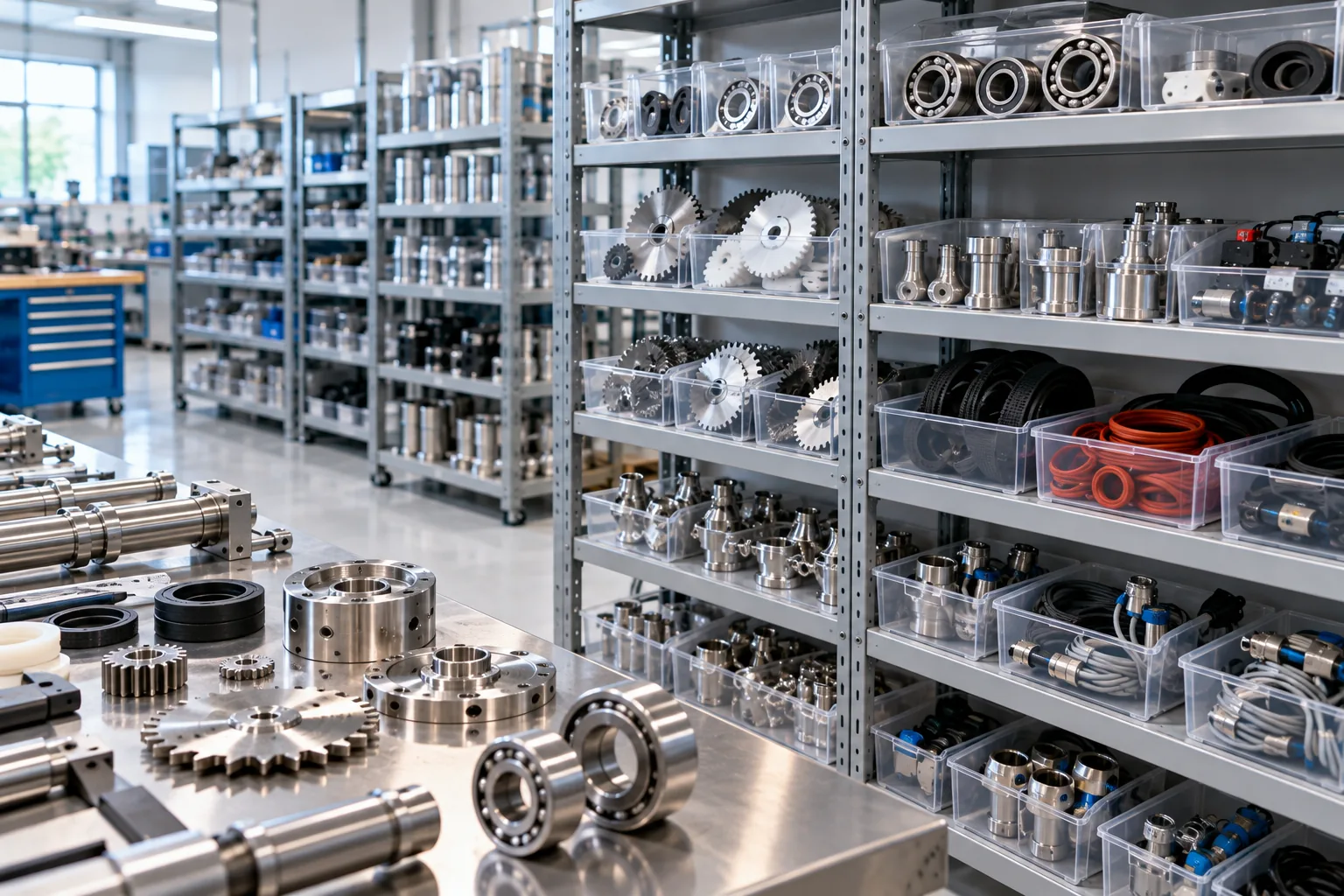
A machine stoppage of several hours is often caused by the lead time of a single part being waited on. Identifying critical spare parts in advance and keeping them in stock significantly shortens unplanned downtime.
A spare parts inventory creates costs at both extremes: keeping everything in stock ties up capital, while keeping nothing stops production. The goal is to have the right parts in the right quantities.
Classifying Parts
| Class | Characteristic | Example |
|---|---|---|
| Critical | Its failure stops the line, long lead time | Custom-machined parts, servo motor, drive, heater |
| Consumable | Wears regularly, replaced frequently | Gasket, belt, blade, sealing element |
| Standard | Readily available on the market | Bearing, fuse, standard bolts and fasteners |
How to Decide What to Stock
- Does the part's failure stop production?
- How long is the lead time?
- How often has it been replaced recently?
- Is the same part used in other machines on the line?
Critical parts with long lead times should be kept in stock; stock levels for consumables should be set according to the replacement frequency derived from maintenance records.
The Role of the Technical File
If you have the machine's technical drawings and parts list, custom parts can be remanufactured when needed. Asking for the parts list and a recommended spare parts kit to be delivered when buying a machine reduces supply problems later on.
The real gain is not avoiding a missing part, but knowing which parts need to be in stock and why.
You can contact us with your spare parts and service requests for our machines.
Let's find the right solution for your project
Tell us what you need and we will propose the most suitable machine or manufacturing solution.