
Cooking Hard Candy: The Role of Moisture, Temperature and Glucose
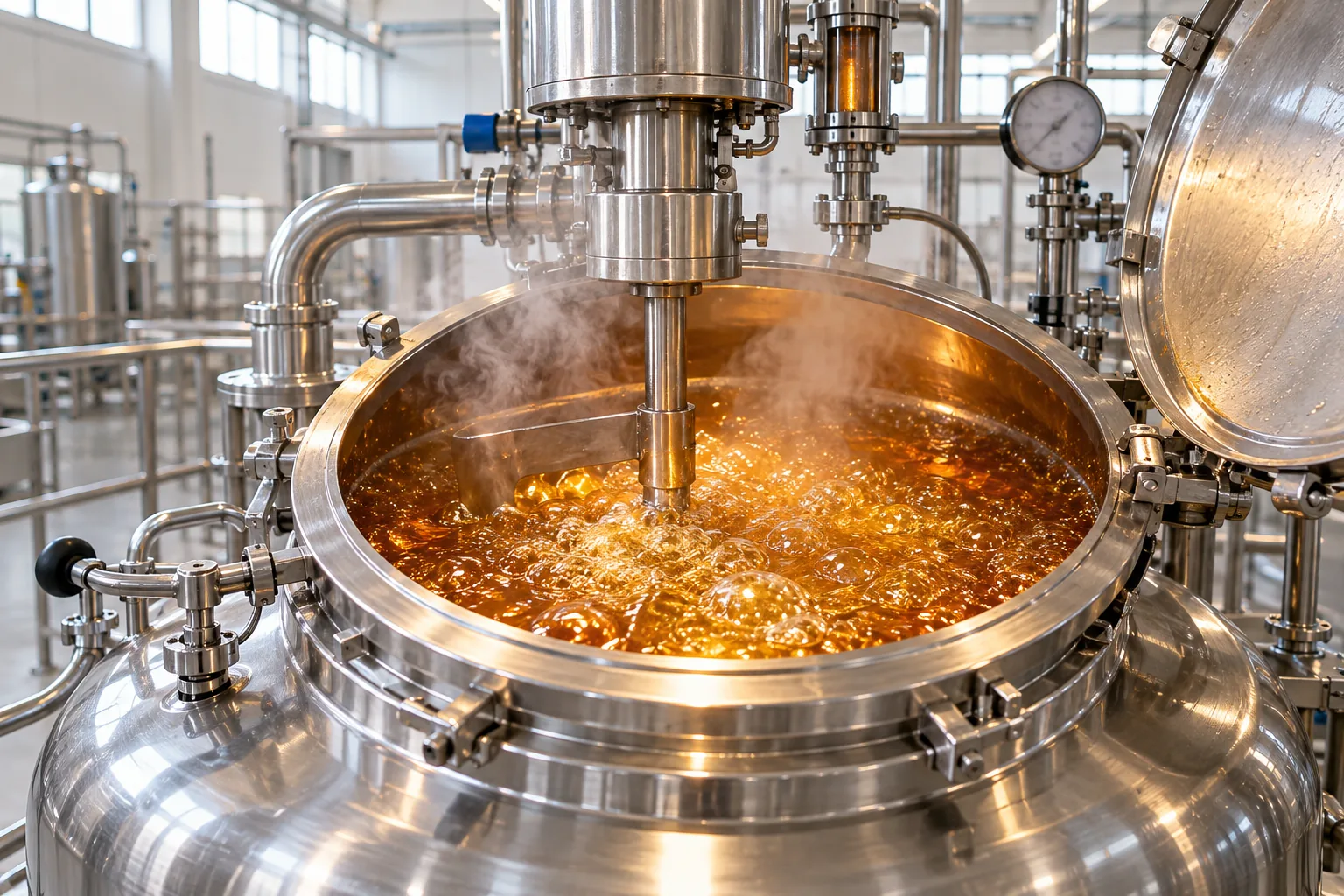
The hardness, gloss and shelf life of hard candy are largely determined at the cooking stage. How much water is driven off the mass and the glucose ratio in the recipe predetermine most of the problems that will occur further down the line.
Hard candy is made by driving off most of the water from a solution of sugar and glucose syrup, bringing it into a glassy (amorphous) structure. As long as this glassy structure remains stable, the candy is glossy, hard and brittle; when it breaks down, stickiness, dulling and crystallization begin.
What Happens During Cooking?
As the mixture in the kettle is heated, water evaporates and the sugar concentration of the solution rises. The higher the cooking temperature, the lower the residual moisture. If residual moisture is too high, the product stays soft, becomes sticky and clings together inside the wrapper; if moisture is reduced more than necessary, the mass takes on color, a caramelized taste appears and it becomes harder to process.
That is why what is really being controlled in the cooking kettle is residual moisture rather than temperature; temperature is an indirect indicator of moisture. When the same recipe is cooked at a different altitude or pressure, the same temperature may not yield the same moisture. Vacuum cooking allows water to be driven off at a lower temperature, reducing changes in color and flavor.
Why Is Glucose Syrup Used?
A hard candy made with sucrose (table sugar) alone is highly prone to crystallizing as it cools. Glucose syrup adds sugar molecules of different sizes to the mass, making crystal formation more difficult. The sugar/glucose balance in the recipe affects the following:
- Resistance to crystallization: The more glucose, the more stable the mass.
- Tendency to absorb moisture: When the glucose ratio is very high, the product becomes more prone to absorbing moisture from the air and may become sticky.
- Workability: How long the mass stays plastic on the cooling table, during pulling and during rope sizing depends on this balance.
Points to Watch on the Machine Side
- Heating control: Being able to adjust the kettle's heating power in stages reduces batch-to-batch variation.
- Mixing: Scorching on the kettle wall and local overheating spoil the product's color and flavor.
- Discharge: Transferring the cooked mass to the cooling table quickly and in a controlled way lowers the risk of crystallization while it waits.
Many problems on the line — sticky products, an irregular rope, a dulling surface — originate in cooking. Before looking for the problem in cutting or packaging, you need to look at the cooking data.
You can take a look at our Rope-Formed Hard Candy Line page for the cooking kettle and the other stations of the rope-formed line, and contact us to discuss a cooking setup suited to your recipe.
Let's find the right solution for your project
Tell us what you need and we will propose the most suitable machine or manufacturing solution.